Technical Skills · 08 Sep 2026
Why Technical Skills Remain Essential in the Age of AI
AI can support planning and diagnosis, but hands-on technical work still depends on human judgement, dexterity, safety awareness and responsibility.
Artificial intelligence is changing how people find information, write reports, plan work and analyse data. That change is real. But it does not remove the value of people who can safely install, repair, test, build and improve things in the physical world.
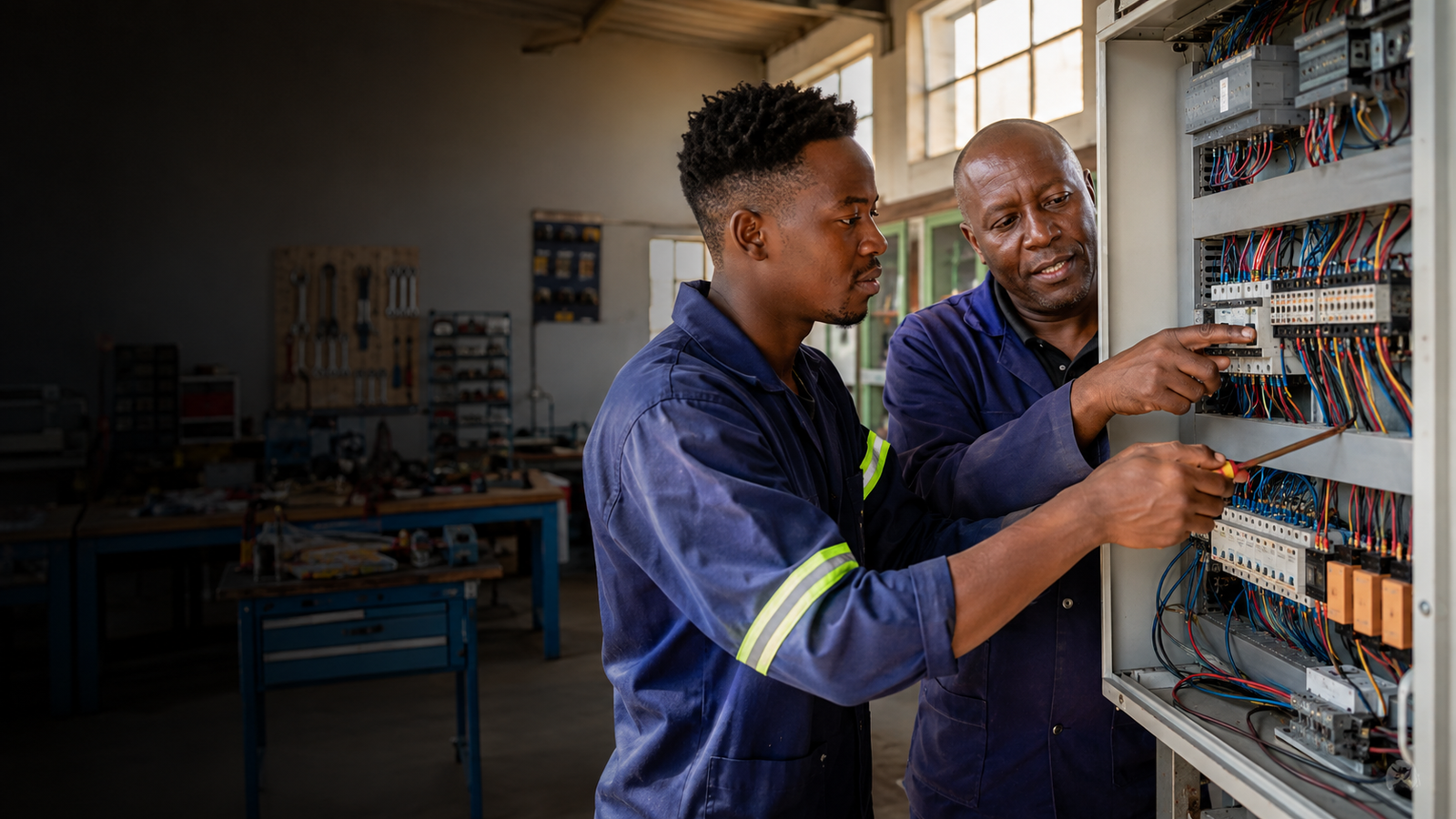
Technical work is more than following a written instruction. An electrician may need to notice an unusual sound, assess risk before touching a panel, work around an older installation, select the right tool, communicate with a client and take responsibility for a safe result. A plumber, auto-electrician, garment maker or catering professional faces the same kind of real-world variation: materials differ, spaces are imperfect and people depend on the quality of the work.
AI can be a useful assistant. It can help a trainee explain a concept, prepare a checklist, compare options or document a job. It does not replace the practical judgement needed when a component is damaged, an environment is unsafe, a measurement does not make sense or a customer needs a clear human explanation.
The best response to AI is not to step away from technical education. It is to build a stronger combination of practical skill, problem solving, communication and digital confidence. Learners who can work with their hands and understand digital tools are better placed to adapt as workplaces change.
What makes a technical skill durable?
• Human judgement: deciding what is safe, suitable and proportionate in a specific situation.
• Dexterity and care: using tools, materials and equipment accurately in changing physical environments.
• Troubleshooting: finding the cause of a fault when the answer is not written down.
• Accountability: completing work to a standard that protects people, property and a professional reputation.
• Communication: listening to a client or teammate and explaining a practical decision clearly.
Research on technological change has long shown that technology reshapes tasks rather than simply erasing whole occupations. The International Labour Organization’s recent global assessment similarly finds that most occupations still contain tasks requiring human input; job transformation is more likely than total replacement. That is especially important for learners choosing a practical career: the goal is to develop skills that can work alongside new tools, not compete with a chatbot.
At NHEYOTECH, practical training is about building the confidence to do useful work well. Whether you choose electrical wiring, plumbing, auto electrics, garment making, catering or digital marketing, the habit of learning, testing and improving remains valuable.
References
1. Autor, D. H., Levy, F., & Murnane, R. J. (2003). The Skill Content of Recent Technological Change: An Empirical Exploration. The Quarterly Journal of Economics, 118(4), 1279–1333. https://doi.org/10.1162/003355303322552801
2. Gmyrek, P., Berg, J., Kamiński, K. and colleagues (2025). Generative AI and Jobs: A Refined Global Index of Occupational Exposure. International Labour Organization, Working Paper 140. https://www.ilo.org/publications/generative-ai-and-jobs-2025-update
Technical work is more than following a written instruction. An electrician may need to notice an unusual sound, assess risk before touching a panel, work around an older installation, select the right tool, communicate with a client and take responsibility for a safe result. A plumber, auto-electrician, garment maker or catering professional faces the same kind of real-world variation: materials differ, spaces are imperfect and people depend on the quality of the work.
AI can be a useful assistant. It can help a trainee explain a concept, prepare a checklist, compare options or document a job. It does not replace the practical judgement needed when a component is damaged, an environment is unsafe, a measurement does not make sense or a customer needs a clear human explanation.
The best response to AI is not to step away from technical education. It is to build a stronger combination of practical skill, problem solving, communication and digital confidence. Learners who can work with their hands and understand digital tools are better placed to adapt as workplaces change.
What makes a technical skill durable?
• Human judgement: deciding what is safe, suitable and proportionate in a specific situation.
• Dexterity and care: using tools, materials and equipment accurately in changing physical environments.
• Troubleshooting: finding the cause of a fault when the answer is not written down.
• Accountability: completing work to a standard that protects people, property and a professional reputation.
• Communication: listening to a client or teammate and explaining a practical decision clearly.
Research on technological change has long shown that technology reshapes tasks rather than simply erasing whole occupations. The International Labour Organization’s recent global assessment similarly finds that most occupations still contain tasks requiring human input; job transformation is more likely than total replacement. That is especially important for learners choosing a practical career: the goal is to develop skills that can work alongside new tools, not compete with a chatbot.
At NHEYOTECH, practical training is about building the confidence to do useful work well. Whether you choose electrical wiring, plumbing, auto electrics, garment making, catering or digital marketing, the habit of learning, testing and improving remains valuable.
References
1. Autor, D. H., Levy, F., & Murnane, R. J. (2003). The Skill Content of Recent Technological Change: An Empirical Exploration. The Quarterly Journal of Economics, 118(4), 1279–1333. https://doi.org/10.1162/003355303322552801
2. Gmyrek, P., Berg, J., Kamiński, K. and colleagues (2025). Generative AI and Jobs: A Refined Global Index of Occupational Exposure. International Labour Organization, Working Paper 140. https://www.ilo.org/publications/generative-ai-and-jobs-2025-update